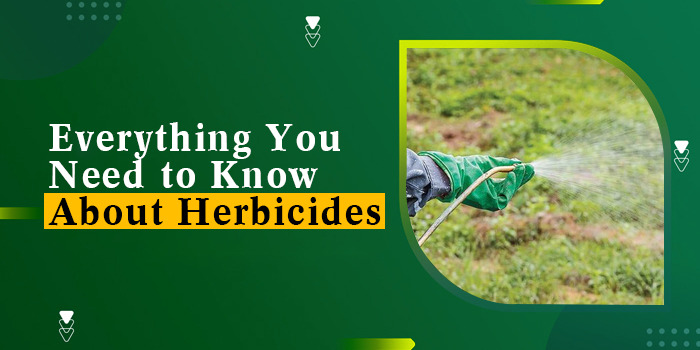
Everything You Need to Know About Herbicides
The modern-day agriculture is concerned with generating more food with the use of a smaller land and addressing issues such as weeds, pests, and climatic stress. Weeds, among others, are amongst the greatest hindrances to healthy crop growth. They also crowd out crops as sources of water, nutrients, sunlight, and space and greatly lower the yield and quality. Herbicides are the answer-special chemicals that are used to control or destroy undesired plants. Herbicides are very important in enhancing the productivity of farms and their sustainability as well as enabling farmers to maximize their returns.
What Are Herbicides?
Herbicides are chemical compounds that are specifically designed to kill or prevent the growth of unwanted plants, which are popularly called weeds. Having been used to regulate the use of weeds, the use of herbicides means that crops have free access to other crucial resources such as water, sunlight, and soil nutrients.
Herbicides are time and labor-saving, unlike manual or mechanical weeding since they are much more efficient in large-scale farming.
Key Features of Herbicides:
- Developed to kill weeds either selectively or non-selectively.
- Powerful at extremely low concentrations.
- Applicable either prior to sowing, crop development or post-harvest.
- Help in increased yield and quality produce.
Types of Herbicides
Herbicides are classified according to mode of action, time of application, and selectivity.
1. According to Selectivity
Selective Herbicides
Destroy particular weeds without damaging the primary crop.
Example: 2,4-D for controlling broadleaf weeds in cereals.
Non-Selective Herbicides
Destroy all plants they touch.
Used for clearing land prior to sowing or non-crop land.
Example: Glyphosate.
2. According to Time of Application
Pre-Plant Herbicides
Applied prior to planting crops to destroy present weeds.
Pre-Emergence Herbicides
Applied prior to weed seed germination.
Form a barrier of protection in the soil.
Example: Pendimethalin.
Post-Emergence Herbicides
Used after weeds have germinated and emerged.
Example: Metsulfuron, Atrazine.
3. According to Mode of Action
Contact Herbicides
Kill plant tissue on contact.
Act quickly, but typically kill only above-ground tissue.
Systemic Herbicides
Taken in and moved throughout the plant.
Kill the plant internally, including roots.
Role of Herbicides in Modern Agriculture
Herbicides are the backbone of modern agriculture since they:
Provide greater yields by minimizing weed competition.
Save labor expense by substituting manual weeding.
Offer prompt weed control, which is important at crucial crop developmental stages.
Facilitate bulk farming, where manual weeding is uneconomical.
Enhance crop quality, as crops receive maximum nutrients and sunlight.
With increasing population pressures, herbicides are critical to ensuring food security and sustainable agriculture.
Applications of Herbicides
Herbicide use differs according to crops and agricultural practices.
In Cereal Crops (Wheat, Rice, Maize)
Selective herbicides manage broadleaf and grassy weeds.
Enhances grain yield and minimizes nutrient loss.
In Horticultural Crops (Fruits, Vegetables, Plantations)
Is utilized to avoid weeds in vineyards and orchards.
Delays competition and improves the quality and size of the fruits.
In Cash Crops (Sugarcane, Cotton, Soybean)
Is effective in eliminating weeds during extensive crop cycles.
Minimizes the expense of repeated hand weeding.
In Non-Crop Areas
Non-selective herbicides are applied to roadsides, industries, and walkways.
Advantages of Herbicides
Making proper use of herbicides renders several advantages:
Increased Productivity - Prevents competition with weeds, allowing for higher yields.
Labor Saving - Reduces reliance on labor to weed.
Time Saving - Fast and efficient weed control, particularly in large-scale farms.
Preservation of Soil Health - Prevents repeated mechanical tillage that destroys the soil structure.
Cost Savings - Reduces overall cost of weed management.
Improved Crop Quality - Prevents weeds from weakening crops to become stronger, healthier, and more marketable.
Flexibility in Agriculture - Offers weed management solutions for various stages of crops.
Challenges of Herbicide Use
Though they have their benefits, misuse of herbicides creates challenges:
Herbicide Resistance - Repetitive use of the same herbicide can result in resistant weeds.
Damage to Crops - Wrong dosage or timing can damage crops.
Environmental Issues - Misuse can impact soil, water, and non-target species.
That is why farmers must always apply herbicides according to guidelines, selecting the most appropriate herbicide for crops in consultation with specialists.
Safe and Effective Application of Herbicides
In order to achieve maximum benefits and avoid adverse consequences, farmers must adhere to the following practices:
Apply herbicides recommended for a particular crop.
Use the right dose and timing.
Adhere to label instructions from manufacturers.
Rotate herbicides for reasons of resisting resistance.
Employ protective gear when spraying.
Keep herbicides safely, away from food and water sources.
At Dhanuka Agritech Ltd., we provide our herbicide solutions with precise guidelines, expert advices, and farmer assistance for safe use.
Role of Dhanuka Agritech in Herbicide Solutions
Being one of the foremost herbicide companies of India, Dhanuka Agritech Ltd. offers extensive products for weed control formulated for Indian crops and climate.
Why Choose Dhanuka Herbicides?
Extensive portfolio: Efficient herbicides for cereals, pulses, fruits, vegetables, and cash crops.
Reliable formulations: Fundamentally supported by research and field-tested effectiveness.
Support for farmers: Specialized advice for choosing the optimal herbicide for crops.
Sustainable strategy: Solutions that aim to reconcile productivity and environmental safety.
Pan India presence: Convenient accessibility all over India through our robust distribution network.
Dhanuka herbicides enable farmers to safeguard their crops effectively, leading to increased yield and profitability.
Future of Herbicides in Agriculture
The future of weed management is heading in the direction:
Eco-friendly formulations with lowered environmental footprint.
Integrated Weed Management (IWM) integrating herbicides with cultural methods.
Herbicide-resistant crop types allowing for specific weed control.
Precision-based digital technologies for reduced wastage.
Firms such as Dhanuka Agritech Ltd. are leading the way in innovation, providing next-generation herbicides to assist farmers in overcoming challenges of tomorrow.
Conclusion
Weeds are one of the major risks to crop yields, but with proper application of herbicides, farmers can surmount this. Herbicides guarantee increased yields, quality produce, lower labor expenses, and more environmentally friendly farming methods.
One of India's leading herbicide manufacturers with trust, Dhanuka Agritech Ltd. is committed to offering the finest herbicides for crops, designed for varied Indian agricultural conditions. Our purpose is to empower farmers with innovative and dependable weed management solutions that enhance productivity and profitability.