Cormorant
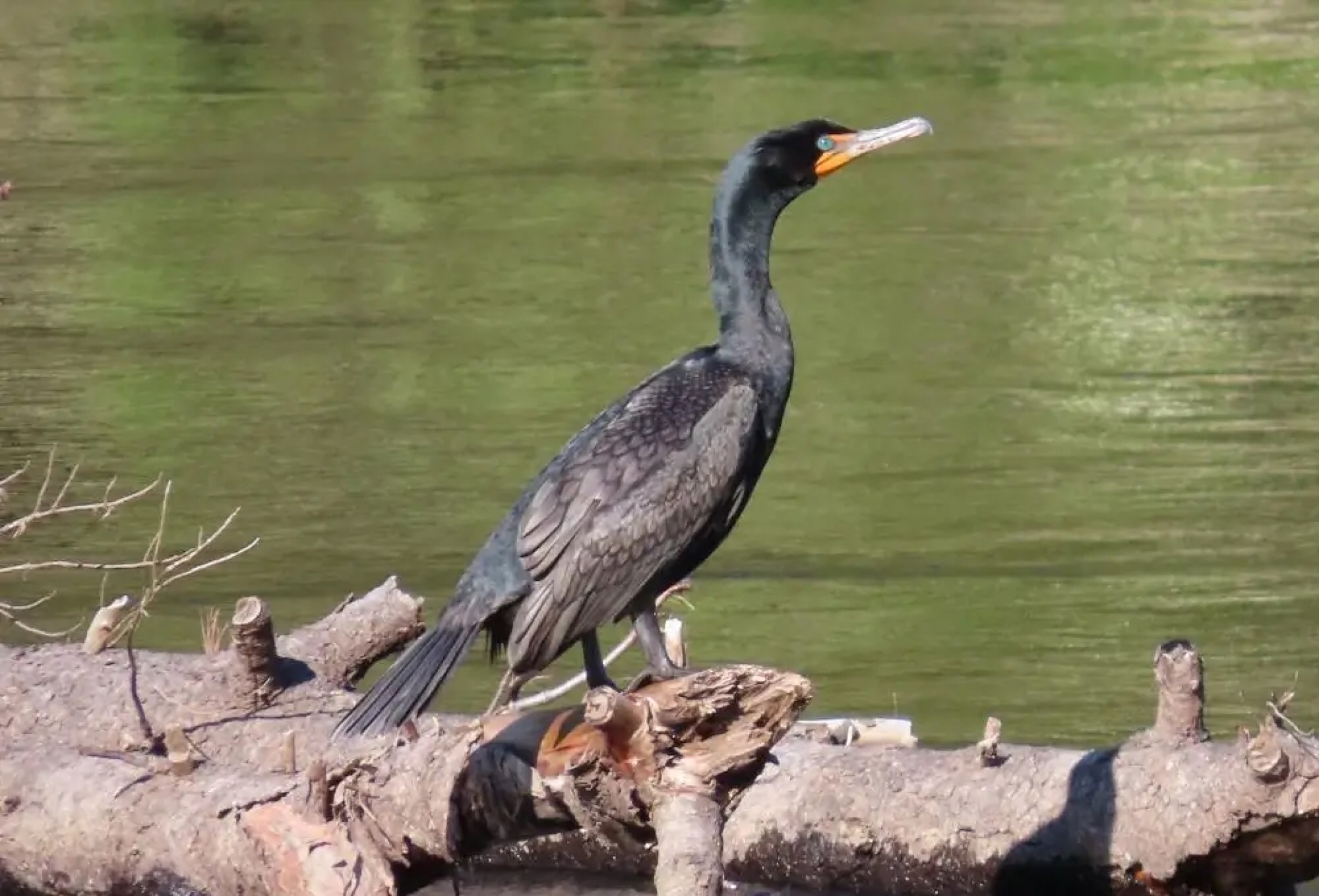
The bird everyone loves to argue about.
Few birds on the lake generate as much discussion as the Double-crested Cormorant.
Some people worry they'll eat all the fish. Others point out that they're native birds making a comeback after nearly disappearing because of DDT. The truth is more complicated-and scientists are still studying exactly how cormorants affect individual lakes.
Around the lake, a few cormorants aren't necessarily a problem. Large colonies on some Ontario lakes have damaged island vegetation through years of accumulated guano, but a handful of birds doesn't automatically mean that will happen here. That's why monitoring is far more valuable than jumping to conclusions.
Why they're amazing
Cormorants are extraordinary underwater hunters. They can dive more than 10 metres, stay submerged for over a minute, and propel themselves with powerful webbed feet while chasing fish beneath the surface.
Unlike ducks, their feathers aren't completely waterproof. That's why you'll often see them perched on a rock with their wings spread wide to dry.
Cormorants don't dry their wings because they're tired-they do it because slightly wet feathers help them dive more efficiently.
🕵️ Nature Detective
Scan rocky points and dead trees around the lake. If you see a black bird standing with its wings fully extended, you've almost certainly found a cormorant.
🌅 Best time to see it
Early morning or late afternoon, especially around rocky shorelines.
📸 Can you find one?
Notice the hooked bill and bright orange patch at the base of the beak.
This weekend at the lake...
If you spot a cormorant, don't ask whether it's "good" or "bad."
Ask whether it's the first one you've seen this year, whether it's alone or with others, and where it's spending its time.
Those observations tell the story of how the lake's ecosystem is changing.