Bees
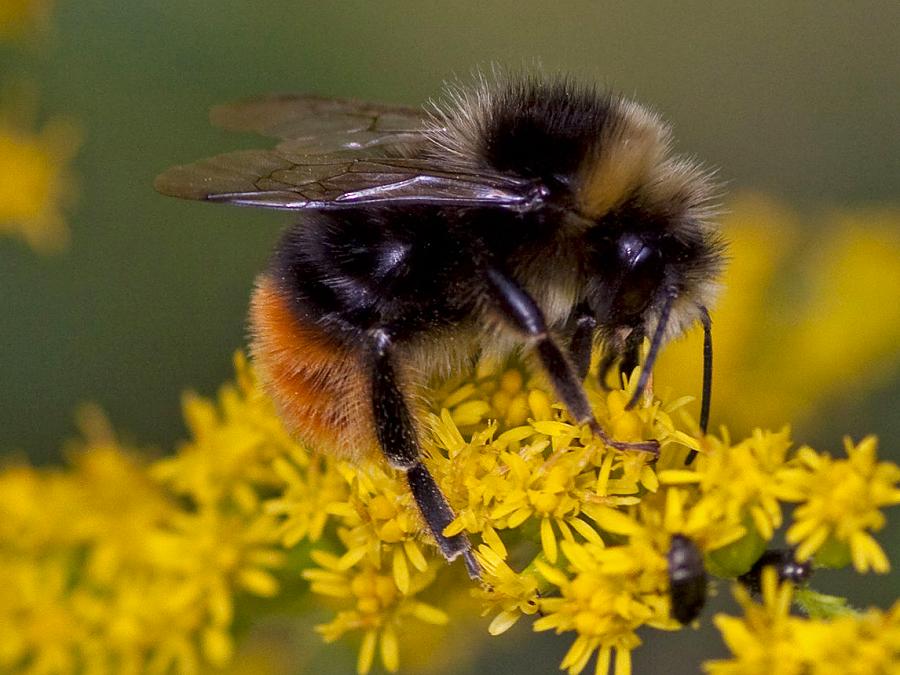
If bats are the night shift, bees are the day shift.
From early spring until late fall, native bees travel tirelessly between wildflowers, shrubs, trees, and gardens, carrying pollen that allows plants to produce seeds and fruit. Without them, many of the flowers that brighten the lake-and the berries enjoyed by birds, bears, and people alike-would simply disappear.
Most people picture honeybees when they think of pollinators, but Ontario is home to hundreds of native bee species. Many live alone rather than in hives, nest in the ground or hollow stems, and rarely sting. They're gentle, fascinating, and incredibly important.
Unfortunately, bee populations are declining due to habitat loss, pesticides, disease, and climate change.
The good news is that everyone on the lake can help.
Plant native wildflowers. Leave a few areas a little "messy." Avoid pesticides whenever possible. Even a small patch of flowering plants can become an oasis for pollinators.
The next time you hear the soft buzz of a bee drifting through the garden, remember that you're listening to one of Ashby Lake's hardest workers.