Flying Squirrels
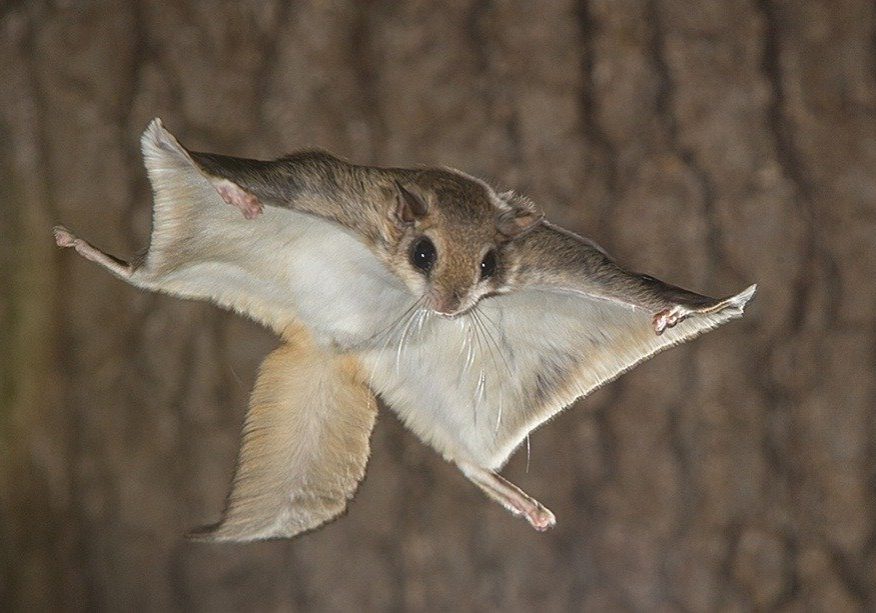
Most people spend years at Ashby Lake without ever spotting a flying squirrel. That's because they don't come out until after sunset.
Despite their name, flying squirrels don't actually fly. They glide using a furry membrane stretched between their front and back legs, silently steering from tree to tree. A single glide can cover more than 30 metres.
Unlike the familiar grey squirrels, flying squirrels are nocturnal. While you're sitting around the campfire, they're often high overhead searching for seeds, nuts, berries, fungi, and insects.
Why they're amazing
Flying squirrels are one of the forest's great gardeners. They love eating underground fungi and spread fungal spores throughout the forest, helping trees share nutrients through the hidden mycorrhizal network beneath your feet.
Without realizing it, these tiny nighttime acrobats help keep the forest healthy.
Flying squirrels glow pink under ultraviolet light-a discovery scientists only made in 2019.
🕵️ Nature Detective
About 30 minutes after sunset, stand quietly near mature hardwood forest. Listen for soft chirps or rustling overhead. You probably won't see wings-you'll see a small shadow silently glide between trees.
Best time to see it
Warm, calm summer evenings.
📸 Can you find one?
If you do, you've seen something that many lifelong cottagers never notice.
This weekend at the lake..
The next time you're outside after dark, look up instead of down.
The forest above your head is much busier than you think.