Wood Frog
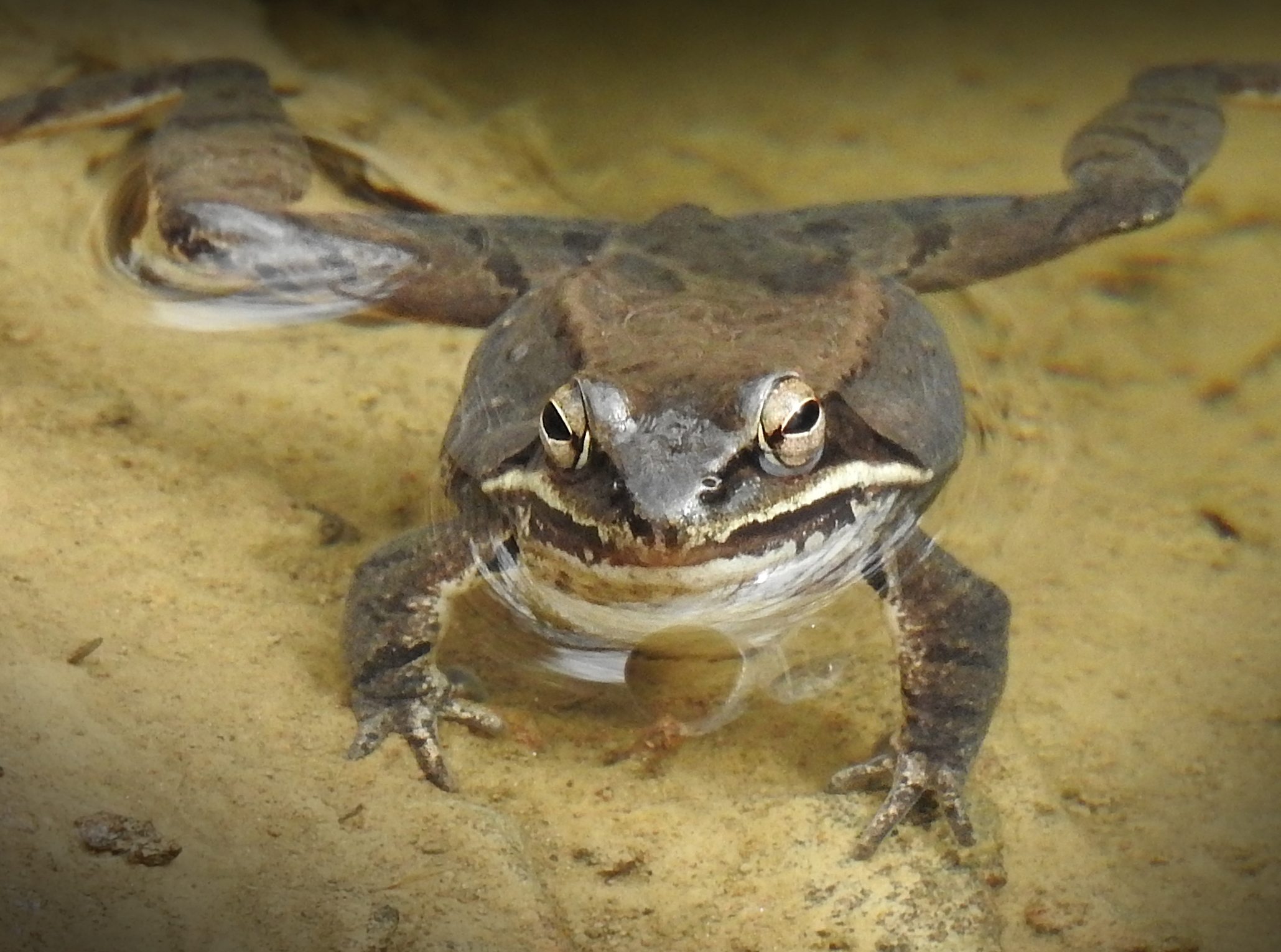
The frog that freezes solid... and survives.
Every spring around Ashby Lake, one of the forest's most remarkable animals wakes up after spending the winter frozen.
Not cold.
Not hibernating.
Frozen.
A wood frog can survive with much of its body turned to ice. Its heart stops beating. It stops breathing. For weeks or even months, it appears completely lifeless.
Then, as the forest warms in spring, it thaws-and hops away as if nothing happened.
Why they're amazing
Wood frogs produce natural antifreeze by flooding their cells with glucose before winter arrives. This protects their tissues while ice forms around them.
They're one of the few vertebrates on Earth capable of surviving being frozen.
Even better, they're among the first signs that spring has truly arrived.
Long before the trees have leaves, their duck-like "quacking" fills temporary woodland ponds.
Wood frogs don't usually breed in lakes.
They rely on shallow pools formed by melting snow and spring rain-called vernal pools. These temporary ponds usually dry up before fish can move in, making them much safer places for tadpoles to grow.
🕵️ Nature Detective
On a warm evening in April or early May, stop beside a shallow woodland pond.
If you hear what sounds like dozens of tiny ducks quacking all at once...
...you're probably listening to hundreds of wood frogs looking for mates.
🌅 Best time to see it
Warm spring evenings, especially after rain.
📸 Can you find one?
Look for the dark "bandit mask" running through each eye.
It's one of the easiest ways to recognize a wood frog.
This weekend at the lake...
The next time you hear frogs calling, don't just enjoy the sound.
Imagine that many of those tiny singers were frozen solid only a few weeks earlier.
The forest is full of miracles-you just have to know where to look.