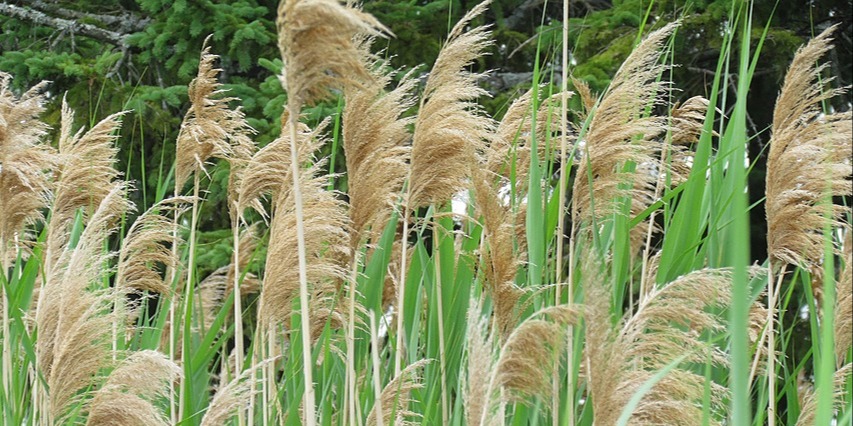
Phragmites (Invasive Common Reed)
A shoreline plant that can take over
What is it?
A tall, non-native grass that spreads aggressively along shorelines, wetlands, ditches and shallow water.
Why is it invasive?
It forms dense stands that crowd out native plants and reduce the quality of habitat for wildlife.
How to spot it:
-
Can grow up to 5 metres (16 feet) tall.
-
Dense clusters of upright, tan-coloured stems.
-
Blue-green leaves and large, feathery seed heads.
-
Often forms a thick wall of vegetation with little else growing among it.
Native common reed can look similar, so identification matters.
If you find it
-
Photograph the whole stand and a close-up of the stems and seed heads.
-
Record the location, ideally with a map pin.
-
Report the sighting before attempting control.
-
Don't mow, dig up or compost it. Fragments and seeds can spread it, and poorly planned removal can make the problem worse.
Don't tackle a large stand yourself. Get advice on an appropriate control method.