Spiny Water Flea
A tiny invader that can hitchhike on fishing gear
What is it?
A tiny, predatory freshwater crustacean originally from Eurasia. It is not a flea in the usual sense.
Why is it invasive?
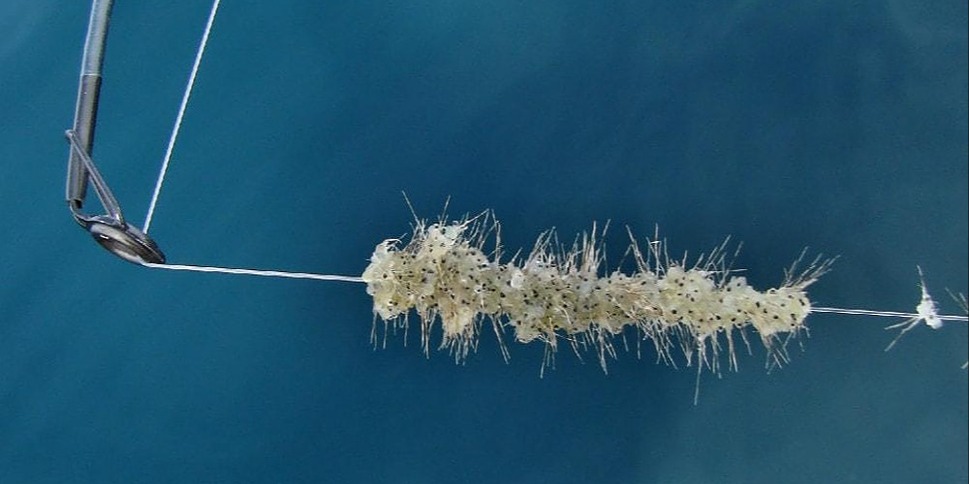
It eats native zooplankton-tiny animals that are an important food source for small fish and young sport fish. Its tail can also clog fishing lines and nets.
How to spot it
-
Usually around 1-1.5 cm long, including its long tail.
-
Nearly transparent or sometimes orange-toned body.
-
One dark eye and a distinctive long tail spine with small barbs.
-
Often appears as a gelatinous clump with tiny dark spots on fishing lines.
Individual animals are difficult to identify without magnification.
If you find it
-
Photograph the clump on the line before removing it.
-
Don't rinse it back into the lake or transfer it to another waterbody.
-
Dispose of collected material securely on land.
-
Clean and dry fishing gear, nets, boat equipment and other wet gear before using them elsewhere.
Prevention is the big win: drain all water from live wells and bilges, remove visible material and let equipment dry completely for at least five days when following Ontario's recommended drying guidance.