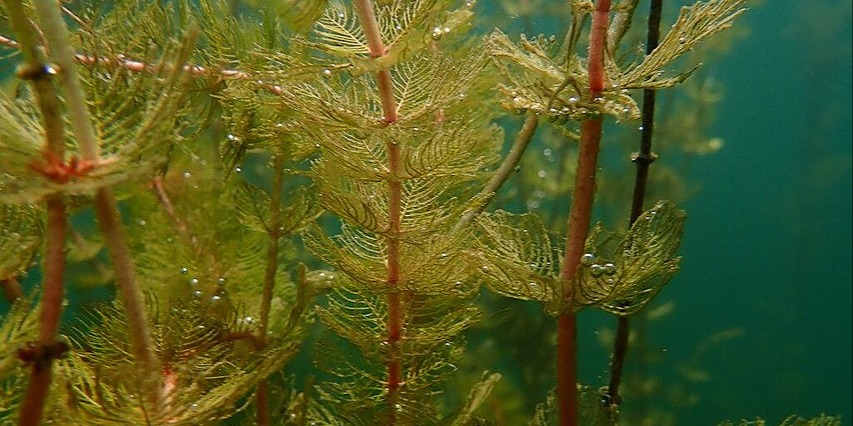
Eurasian Water-Milfoil
An underwater plant that spreads in fragments
What is it?
A submerged aquatic plant that can grow into thick underwater beds and dense mats at the surface.
Why is it invasive?
It can crowd out native aquatic plants, interfere with swimming and boating, and alter habitat and oxygen conditions.
How to spot it
-
Long, flexible stems growing underwater.
-
Fine, feathery leaves arranged in whorls around the stem.
-
Each leaf typically has 12-21 pairs of threadlike leaflets.
-
Dense patches may reach the surface, especially in sheltered water.
Native northern water-milfoil looks similar, so a photograph alone may not always settle the identification.
If you find it:
-
Photograph the plant underwater and, if possible, a sample held above the water.
-
Note the location and approximate size of the patch.
-
Report a suspected new patch before attempting removal.
-
Don't rake, chop or pull it casually. Tiny plant fragments can establish new growth.
-
Remove plant fragments from boats, propellers, anchors and trailers before leaving the lake.
For shoreline owners: Ontario has specific rules for aquatic plant removal. Check the current guidance before undertaking a removal project.