2. Smart Phones and Social Media
Smart phones have become a rich information gateway for open source journalism. George Floyd's murder in Minneapolis in 2020 was recorded on video and posted on Facebook by a 17-year-old eyewitness, Darnella Frazier. Six years later, bystanders captured multiple angles of the shootings of Renee Good and Alex Pretti by immigration agents in the same city and posted them on social media.
High definition cameras embedded directly into smart phones allow for clips to be posted on social media networks, such as Instagram, Facebook, X and TikTok. Videos can also be found in community forums such as Reddit and messaging apps such as Telegram and WhatsApp.
"We need to use everything we can from local reports, circulating footage and official statements to all build the story together."
Jasmine Perry, Open source journalist, Storyful

The murderers of Ahmaud Arbery in 2020 could have walked free if there had not been a leaked phone video of his killing. Arbery, 25, was jogging in Satilla Shores, Georgia, when he was cornered and shot by father and son Gregory and Travis McMichael. Part of the events that day had been recorded by a third man, Bryan Williams, and by home security cameras. The New York Times set about investigating his murder.
"There were two sorts of stories -- that Ahmaud Arbery was somebody who resisted a citizen's arrest and ended up being shot. And there was another narrative that, while he was out for a run, he was chased down by rednecks and killed."
Malachy Browne, Enterprise director, Visual Investigations, The New York Times
Cell phone footage posted to social media can make it possible to gather news in some of the world's most hostile or inaccessible environments. Take Bellingcat's 2026 investigation into the Viral Child Soldiers on TikTok of Sudan's civil war (below). Rival forces posted videos on social media of these young "Disney stars" in military uniform brandishing weapons as a recruiting tool.
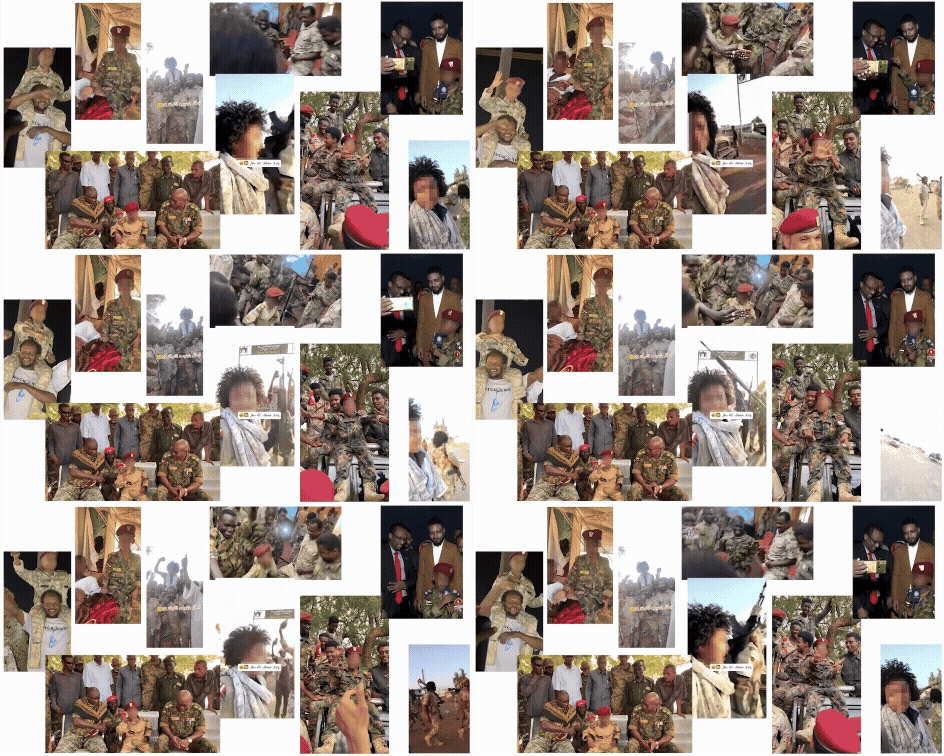
One TikTok account of a child soldier had 700,000 followers. Another was viewed nine million times before being taken down after being flagged to TikTok by Bellingcat. Using geolocation tools (see Chapter 3), Bellingcat was also able to verify mass casualties shown on some of the videos.
In this chapter, we will show how to search for content on social media and other databases. Remember, not all plaforms will be useful for the same purpose. For example, X is very good for searching within a time parameter, but people are more likely to respond to your message for verification on Instagram.