The Berkeley Protocol
Open source intelligence has transformed opportunities for documenting conflicts, human rights abuses and global events. The Berkeley Protocol on Digital Open Source Investigations provides an ethical framework guiding this new technology. It emphasizes transparency and verification to ensure that digital evidence of alleged violations of international law can be used in legal proceedings.
The Protocol urges investigators and journalists to handle publicly available data, such as social media posts, satellite imagery and videos, with great care. Developed by the Human Rights Center at UC Berkeley School of Law and the Office of the High Commissioner, UN Human Rights, it stresses the importance of protecting witnesses, victims, and first responders who risk their own well-being to document war crimes and human rights violations.
Above all, the framework seeks the protection of all parties involved in the investigation. This consideration was uppermost in Sara Lejuez's mind when Voice of America's Persian news network reported on the Iranian Green Movement protests in 2009.
"You're dealing with a society with severe consequences for protestors. A person could be executed or everyone there could face the death penalty. So imagine the pressure and moral obligation to use the information ethically."
Sara Lejuez, Journalism professor, Stony Brook University and former producer, Voice of America
The Berkeley Protocol offers helpful guidance on the investigative process. By following this cycle, open source journalists and other analysts can be confident they have sourced, stored and shared accurate information.
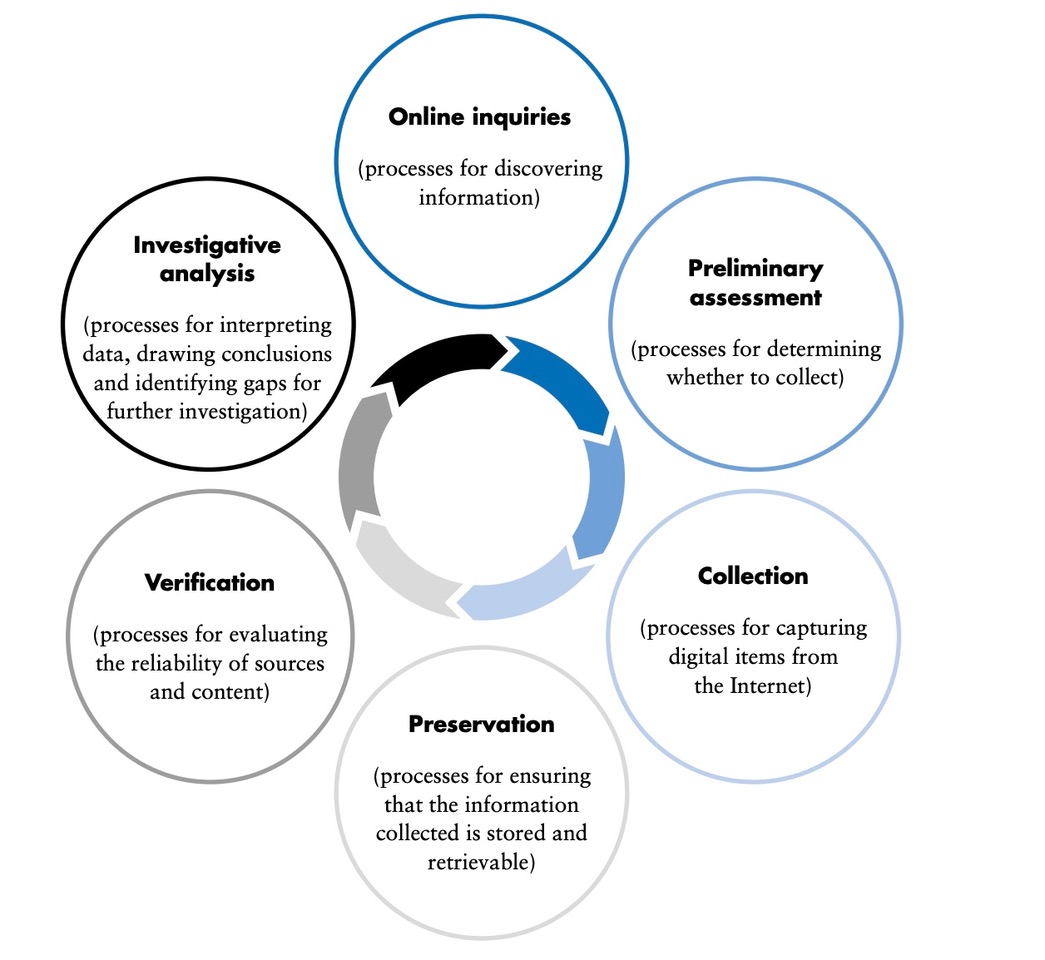
- Begin online search using keywords
- Monitor activity, such as online accounts and social media
- Tag or store potentially relevant information
- Establish the reliability, credibility and accuracy of the source/evidence
- Check the embedded metadata or links and try to establish the original source
- Archive information that may be removed eg. images of war crimes
Adopting an ethical framework is critical in our battle against disinformation. False or manipulated content spreads rapidly online, often designed to exploit emotional reactions and undermine trust. Disinformation doesn't need to convince people of a specific narrative; instead, it aims to erode trust in all information.
The good news is that open source investigative tools can help to debunk false claims, counter misleading narratives and establish credibility. The Berkeley Protocol serves as a North Star, guiding investigators on how to uncover facts ethically.