Importance of Metadata
Metadata is data that provides vital information about other data. In open-source investigations, metadata helps verify when, where, and how a piece of digital content was created. This is especially useful when analyzing photos, videos, or social media posts.
One of the most valuable types of metadata is EXIF data, which can include the date and time a photo was taken, the device used, camera settings, and sometimes even GPS coordinates. This information allows journalists to determine whether content is original or has been altered or reposted out of context.
For example, by right-clicking the home page of the Marie Colvin Center for International Reporting on Google Chrome and then clicking "Show EXIF Data," it can be established that Ivor Prickett's famous picture of Colvin in Tahrir Square, Egypt, during the Arab Spring, was taken at 1:36pm on February 4, 2011 with a Canon EOS 5D camera.
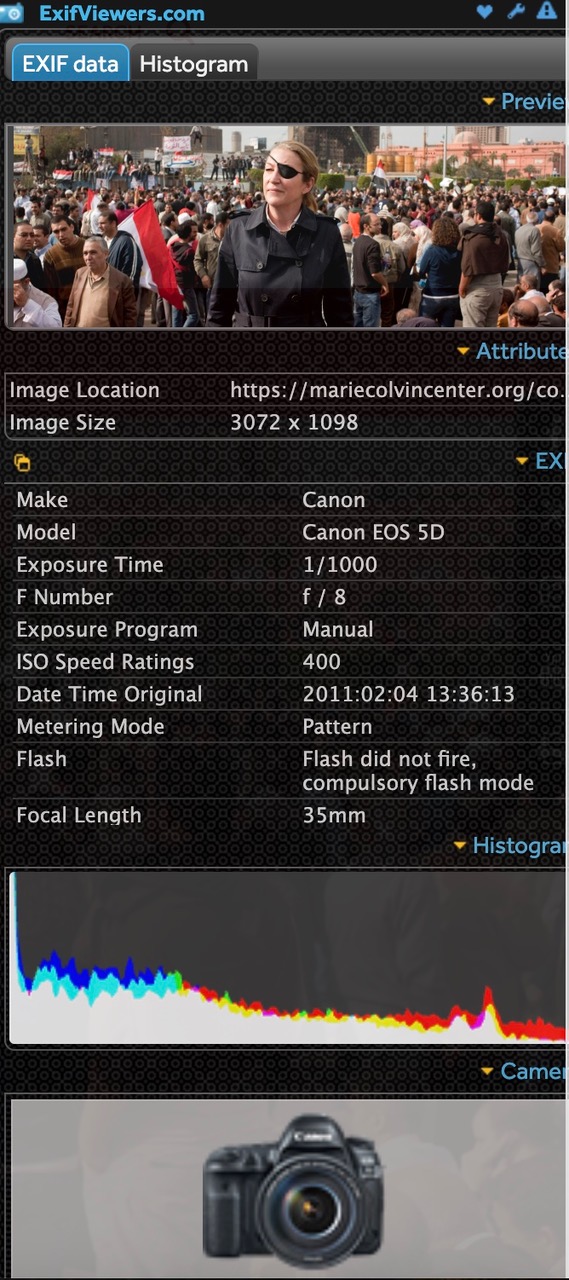
Metadata can be also accessed using tools such as EXIF viewer, Metadata2Go, and browser inspection tools that reveal embedded webpage data. Social media metadata can also provide useful clues through timestamps, usernames, and patterns of engagement.
Metadata is not always available. The messaging app Telegram -- enormously popular in Asia, Russia and Eastern Europe -- retains metadata such as IP addresses and other information, but platforms such as X and Instagram often strip metadata from uploaded images, making it difficult to verify content directly. Rhona Tarrant of CBS News Confirmed explained this limitation when discussing verification on X:
"If a photograph is posted to X, it has no metadata attached. The metadata gets stripped off before it goes on the platform."
Rhona Tarrant, Executive Editor, CBS News Confirmed
Because of this, journalists must rely on additional methods such as reverse image searches, geolocation, chronolocation and cross-referencing with other sources.
Nevertheless, metadata often plays a critical role in verifying digital content. When available it provides key evidence that helps journalists confirm authenticity and prevent the spread of misinformation.