Open Source Origins
Open source journalism is closely related to "citizen journalism" -- something that engages us all. Journalists have access to an ever-expanding digital toolkit of applications and resources to verify content, drawing on publicly available databases, social media content and satellite imagery. The term "open source journalism" was introduced in the title of an article in Salon magazine in 1999 but the importance of this work became clear a decade later when social media took off and reporting in hostile environments became increasingly difficult.
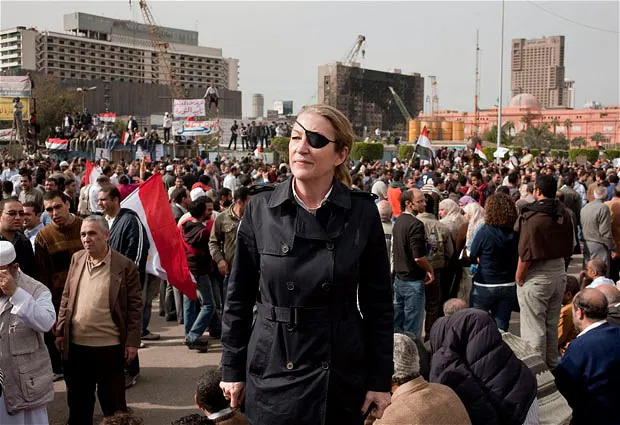
The legendary foreign correspondent Marie Colvin, who gave her name to our Center for International Reporting, was killed covering the Syrian civil war in 2012. Increasingly, the story of the war would be told through verification of digital photographs and video footage supplied by Syrian civilians and other open source tools, such as satellite imagery.
Eliot Higgins, founder of the pioneering open source investigative collective, Bellingcat, drew attention to the seismic impact of Colvin's death on the development of open source journalism in his book, We Are Bellingcat, about online sleuths and the future of news.
"After Colvin's death even fewer Western journalists dared to enter Syria. In their absence the war grew crueler. Its evils would have been hidden from international view, were it not for the internet."
Eliot Higgins, founder of Bellingcat
When the Palestinian journalist Shireen Abu Akleh was shot in 2022 in the West Bank, reporters were able to counter initial claims by the Israeli Defense Forces that she was killed by Palestinian gunfire. An investigation by the visual forensics team at the Washington Post and other media outlets drew on social media content and satellite imagery to show an Israeli soldier likely fired the fatal shot.
The Russian invasion of Ukraine in 2022 and the Israel-Gaza war in 2023 led to a surge in open source investigations. US newsrooms have also used geolocation tools (see Chapter 4) and analysis of social media images to report on crises at home, such as the January 6, 2021 riot at the Capitol and the killing of protesters by immigration enforcement agents in Minneapolis in January 2026, in order to establish an accurate narrative of events.
The meticulous detective work involved in open source journalism has become a crucial part of the reporting process at the heart of contemporary newsrooms.