4. Basics of Geolocation
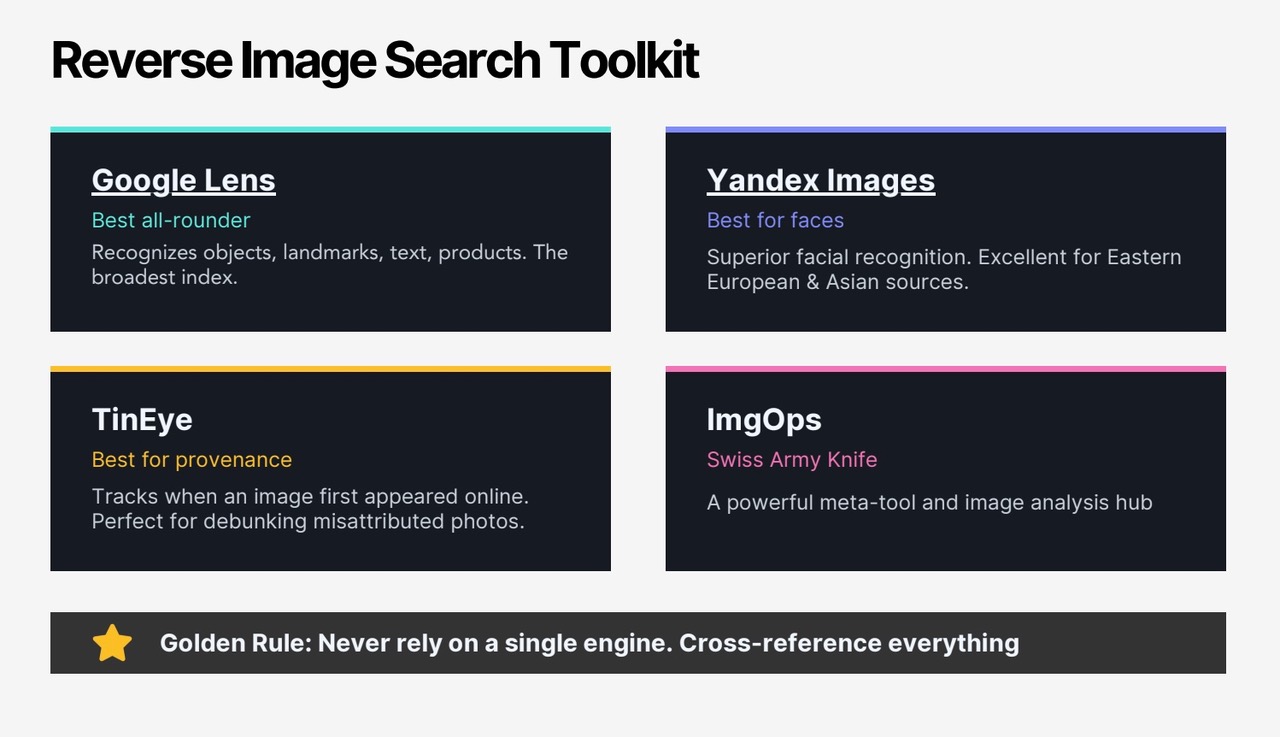
Geolocation is crucial to allow for verification of where and when digital content was taken. Reverse image search tools provide the simplest way to verify landmarks and locations. Google Lens is the best all-round reverse image search engine, but others can yield additional information, such as TinEye (useful for when an image first appeared), Yandex (good for Russia, central Europe and Asia) and, to a limited extent, Baidu (for China). ImgOps brings dozens of different image tools together in one place.
Very often, more detective work is required. On a visit to Storyful's New York office, assistant editor Angelina Fay provided excellent advice on the visual clues that need to be considered when attempting to nail geolocation.
"To answer the question of 'Where is this?' first ask yourself what you can see. Take note of any legible storefronts, road signs, license plates, or any landmarks that might serve as a clue to an exact location.
Angelina Fay, Assistant editor, Storyful
"We can also consider audio," Fay added. "Listen out for any soundbites in the video that might assist in identifying a spoken language. This factor, in conjunction with what you can see, can narrow the focus down to a specific country or region." Other tell-tale signs are phone numbers or internet domain names advertising local services.
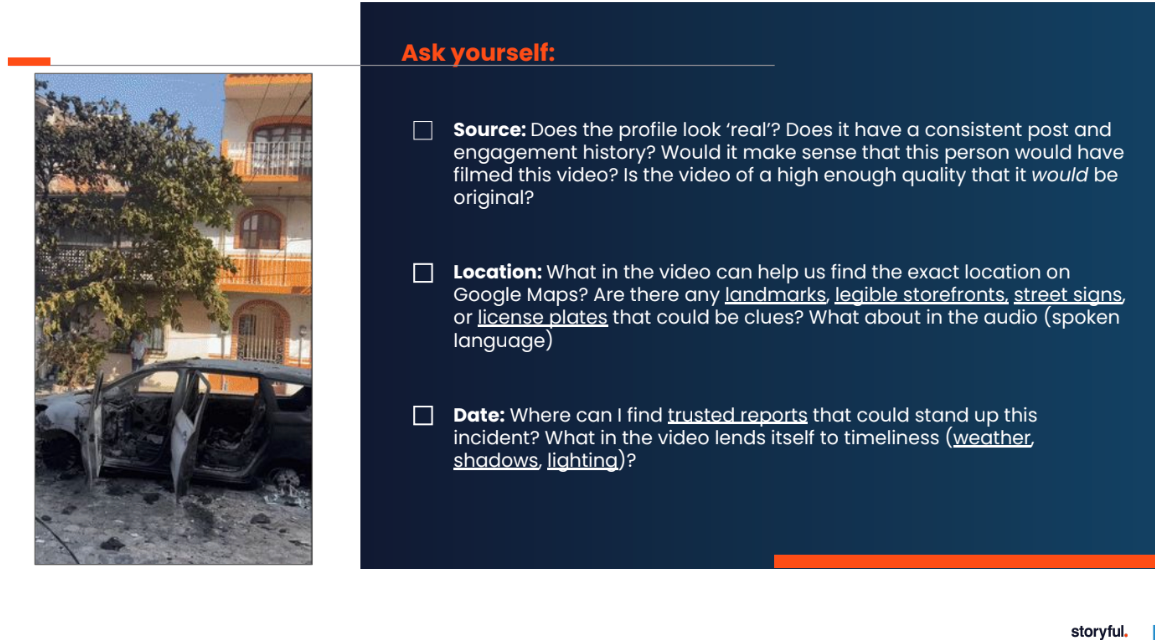
There will also be identifiers in the videos or photos we analyze that will provide evidence of timing: the "when" . Consider the weather - is there snow on the ground or are there flowers blooming? How about the time of day? Check out the angle of the sunlight and shadows - is the sun rising or setting?
Take the following photo. The simplest way to verify the location is to conduct a reverse image search. Putting this image into Google Lens will tell you that this is Kusatsu Onsen, a hot spring resort in Gunma Prefecture, Japan.
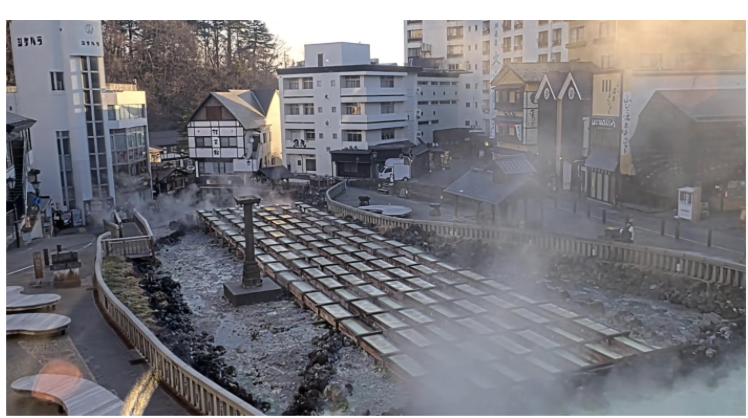
To verify this location we can look for the same resort in Google Maps or visit other sites, such as this Japan destination guide website which features a picture of the attraction from another angle. Zooming into buildings in the background, it is possible to see some Asian characters or script (top left), providing a visual clue to the country. The vegetation is sparse, but not bare, and the angle of the light suggests this could be a morning in early spring.
AI can assist with analyzing these factors but its accuracy cannot be relied on (see Chapter 7). The next section on chronolocation will reveal how to tell the time of day more precisely from shadows and the angle of the sun.